Table of Contents
Exploring the Frank Lloyd Wright World Heritage Sites
Introduction
Frank Lloyd Wright is one of the most influential architects of all time. His work has had a lasting impact on the world and his legacy lives on through his many iconic creations. His work has been honored by UNESCO, which has designated eight of his most significant works as World Heritage Sites. In this blog post, we will explore these sites and learn more about their importance in the history of architecture.
The Unity Temple
The Unity Temple is one of Wright’s most iconic works. This masterpiece of modern architecture was built in Oak Park, Illinois, in 1909. It is one of the first modernist buildings to be constructed in the United States, and was designed as a place of worship that could accommodate a congregation of up to 350 people. The building is composed of concrete, with a flat roof and a series of geometric shapes that give it a unique and distinctive look. Inside, the space is divided into three sections, with a central auditorium, a gallery, and a library. The space is designed to be intimate and inviting, and the use of natural light and simple, geometric forms creates a sense of harmony and unity.
Fallingwater
Fallingwater is one of Wright’s most famous works and is often considered to be his masterpiece. This residential house was built in 1935 in Bear Run, Pennsylvania, and was designed to blend in with the surrounding landscape. The building is composed of concrete, steel, and stone, and features a series of terraces and balconies that offer stunning views of the river below. The house is also known for its innovative use of natural light, with large windows and skylights that bring the outside in.
The Solomon R. Guggenheim Museum
The Solomon R. Guggenheim Museum is one of the most iconic buildings in New York City. This modernist building was designed by Wright in 1959 and is composed of a large spiral form that rises up from the ground. Inside, the space is divided into a series of galleries and exhibition halls, with the main atrium located at the center. The building is known for its innovative use of space, with galleries arranged in a non-linear fashion that encourages exploration and discovery.
Taliesin West
Taliesin West was Wright’s winter home and studio, located in Scottsdale, Arizona. This iconic building was built in 1937 and is composed of a series of terraces, balconies, and courtyards that are connected by a series of pathways and steps. The building is known for its use of natural materials, such as stone and wood, and is designed to blend in with the surrounding desert landscape. Inside, the space is divided into a series of studios and workshops, as well as a main house and guest house.
The S.C. Johnson Wax Administration Building
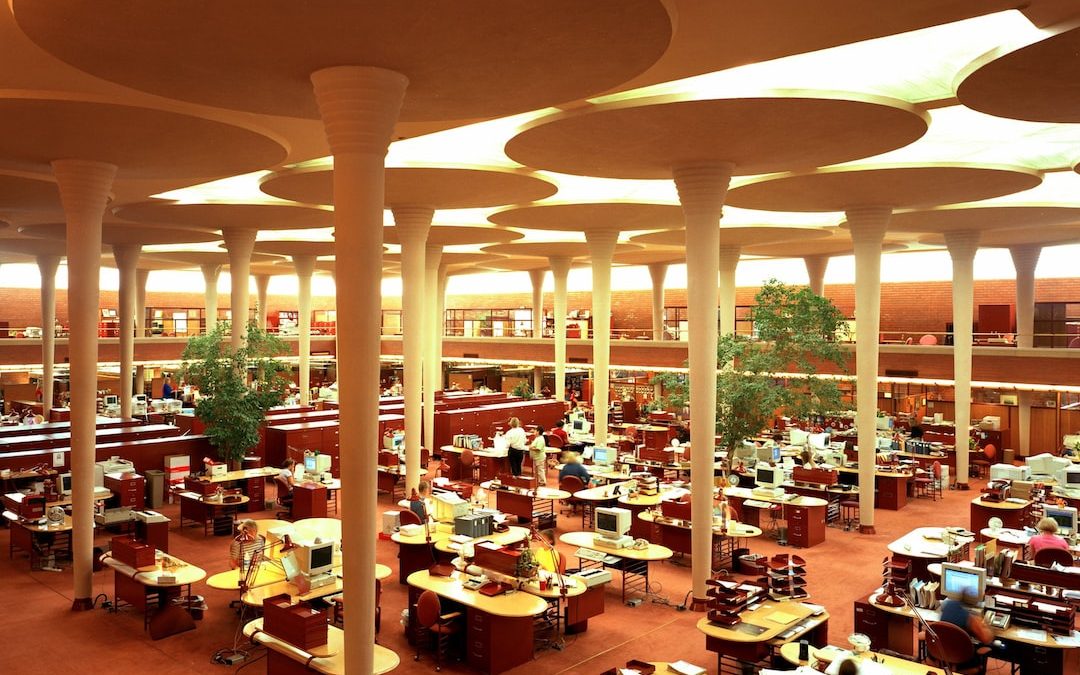
The S.C. Johnson Wax Administration Building is one of Wright’s most famous corporate structures. Located in Racine, Wisconsin, this building was completed in 1939 and is composed of a series of staggered terraces and balconies that are connected by a central atrium. The building is known for its innovative use of space, with the interior divided into a series of public and private areas that are connected by a series of ramps and bridges.
Hollyhock House
Hollyhock House is a Los Angeles residence designed by Wright in 1921. This building is composed of a series of terraces and towers that are connected by winding pathways and steps. It is known for its use of natural materials, such as wood and stone, and for its lush gardens and terraces that offer stunning views of the surrounding city. Inside, the building is divided into a series of rooms and galleries, with the main house located at the center.
The Herbert and Katherine Jacobs House
The Herbert and Katherine Jacobs House is one of Wright’s most iconic residential works. Located in Madison, Wisconsin, this house was built in 1936 and is composed of a series of terraces and balconies that are connected by a series of pathways and steps. The building is known for its innovative use of space, with the interior divided into a series of public and private areas that are connected by a series of ramps and bridges.
The Price Tower
The Price Tower is one of Wright’s most iconic skyscrapers. Located in Bartlesville, Oklahoma, this building was completed in 1956 and is composed of a series of staggered terraces and balconies that are connected by a central atrium. The building is known for its innovative use of space, with the interior divided into a series of public and private areas that are connected by a series of ramps and bridges.
The Marin County Civic Center
The Marin County Civic Center is one of Wright’s most impressive works. Located in San Rafael, California, this complex was completed in 1972 and is composed of a series of terraces, balconies, and courtyards that are connected by a series of pathways and steps. The building is known for its innovative use of space, with the interior divided into a series of public and private areas that are connected by a series of ramps and bridges.
The Imperial Hotel
The Imperial Hotel was designed by Wright in 1923 and is located in Tokyo, Japan. This building is composed of a series of terraces and balconies that are connected by a series of pathways and steps. It is known for its innovative use of space, with the interior divided into a series of public and private areas that are connected by a series of ramps and bridges. The building is also known for its use of natural materials, such as wood and stone, and for its lush gardens and terraces that offer stunning views of the surrounding city.
The Taliesin Estate
The Taliesin Estate is the home of Wright’s summer estate, located in Spring Green, Wisconsin. This estate was built in 1911 and is composed of a series of terraces, balconies, and courtyards that are connected by a series of pathways and steps. The building is known for its innovative use of space, with the interior divided into a series of public and private areas that are connected by a series of ramps and bridges.
The Ennis House
The Ennis House is one of Wright’s most iconic residential works. Located in Los Angeles, California, this house was built in 1924 and is composed of a series of terraces and balconies that are connected by a series of pathways and steps. The building is known for its innovative use of space, with the interior divided into a series of public and private areas that are connected by a series of ramps and bridges.
Conclusion
Frank Lloyd Wright is one of the most influential architects in history, and his work has been honored by UNESCO, who have designated eight of his most important works as World Heritage Sites. In this blog post, we explored these sites and learned more about their importance in the history of architecture. From the iconic Unity Temple to the Imperial Hotel, these sites are a testament to the genius of Wright and his lasting impact on the world.